
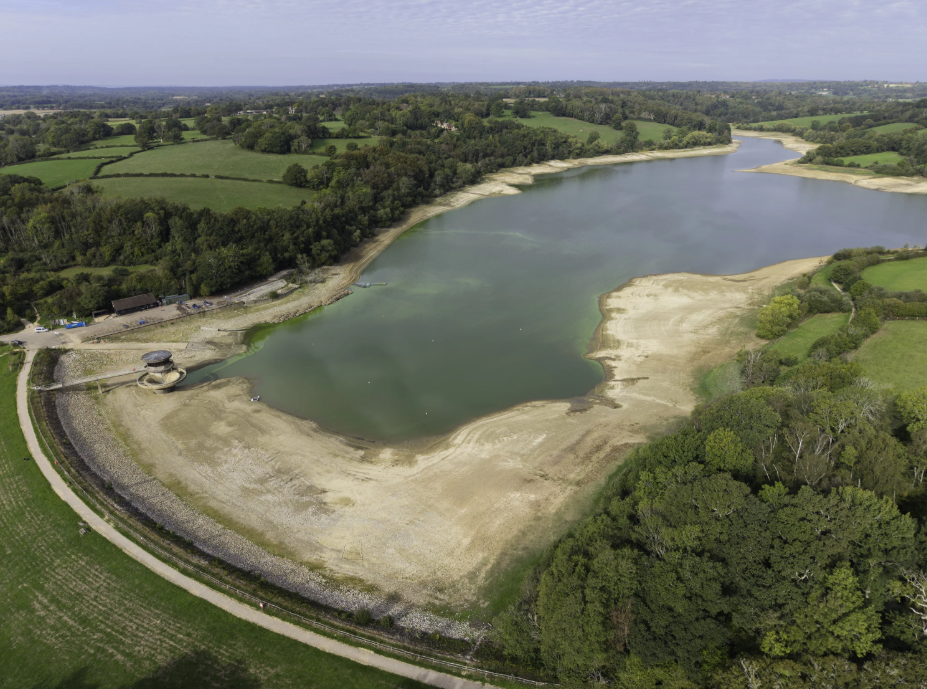
The combination of factors experienced this year has been extraordinary - from record demand for water to prolonged periods of dry weather and a significant lack of rainfall.
The Met Office(opens in a new tab) provisionally reported that summer 2026 is the hottest on record, while July in England was the driest in 190 years. Between March and September, Sussex received just 54 per cent of its expected rainfall and autumn is dry so far.
Although recent rainfall is helping, it hasn't been enough to reverse the current conditions, and we need to prepare should rainfall be lower than average for the rest of autumn and winter. Sussex is supplied by groundwater in aquifers far below our feet, and through two surface reservoirs at Ardingly and Arlington. Levels in our Sussex reservoirs - particularly Ardingly - are extremely low.
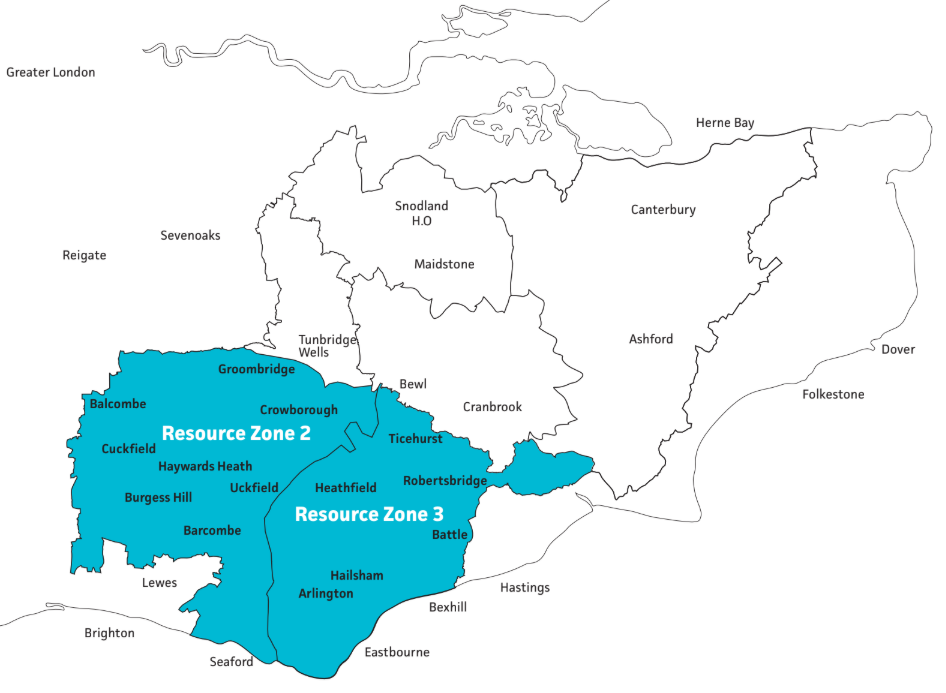
This means we are applying for a Non Essential Use Ban (NEUB) under a Drought Order covering our Sussex supply area. This is currently an application only. Even if granted, it will only be implemented if the drought situation in Sussex becomes more severe.
We are taking this precautionary step to make sure we have the ability to further protect essential water supplies should we need to.
What is a Non Essential Use Ban?
A Non Essential Use Ban (NEUB) is a statutory restriction on mains water use we can apply for under a Drought Order (under Sections 73 and 74(2)(b) of the Water Resources Act 1991) and implemented when there is a threat of serious water shortages. It targets commercial and non-household water use and requires approval by the Secretary of State for the Environment, Food and Rural Affairs.
This is an action included in our Water Resources Management Plan(opens in a new tab) and Drought Plan(opens in a new tab), but we do not take it lightly. We only apply and implement it under exceptional circumstances.

I am a business. How do I know if this affects me?
The Non Essential Use Ban (NEUB), if granted and implemented, would affect non-household and business customers in Sussex where we are the wholesale supplier for water. This includes businesses, commercial premises, public sector organisations, and all other non-domestic users.
If we implement a NEUB, we will:
- Publish a notice in the local newspapers
- Post a message on our social media channels
- Write to stakeholders, local authorities, and MPs in Sussex
- Write to water retailers
- Send out letters to non-households and business customers in Sussex
- Brief our staff about the ban
- Update this webpage with additional information
How can I comment on your application?
The consultation period has now closed. You may still review the application here(opens in a new tab).
How are household customers affected?
We implemented hosepipe restrictions (Temporary Use Ban) for household customers in Kent, Sussex, Berkshire, Surrey and Hampshire in July. Due to the severity of the situation, we announced on 2 October 2026 that certain TUB exemptions are being removed in Sussex effective from 9 October 2026. This means exemptions previously in place - such as commercial hosepipe cleaning for domestic properties, window cleaning, and filling domestic pools - have been removed, except for health, safety, and animal welfare purposes.
More information about the additional measures for household customers in Sussex can be found here(opens in a new tab).
What are you doing to help?
We’ve fast-tracked several key engineering projects to ensure water moves more easily across our network, take the pressure off existing supply sources, and transfer more water directly into Sussex.
We are hard at work on major engineering projects to ease demand on Ardingly Reservoir and slow the rate at which its water levels are falling.
This includes:
- Drought Permit: On 29 September the Environment Agency granted a Drought Permit(opens in a new tab) in Sussex. The permit allows us to reduce the amount of additional water that is released from Ardingly Reservoir into the Shell Brook tributary of the River Ouse and reduce the minimum flow of water that must remain in the river after water has been taken from it for customers.
- Connecting county networks: Having fast-tracked the construction of a new pipeline connecting treated water from Bewl in Kent to the East Sussex network, this system is now this system is now moving water between the counties providing greater resilience and flexibility, and reduces the amount of water being drawn out of Ardingly Reservoir.
- Optimising network pressure in Sussex: We are actively controlling water pressure across Sussex to reduce water stress on our network. Balancing pressure provides a more consistent, reliable supply, minimises burst pipes, and reduces water loss from leaks. For customers, this reduced water waste helps lower bills and means fewer service disruptions.
- Tackling leakage: We’re prioritising the Sussex area around Ardingly to make sure more water we put in supply is reaching customer homes. We’re doing this by:
- More than doubling the number of leakage teams operating in the region to 16, up from seven.
- Nearly halving the number of leaks. With the extra workforce, the number of leaks in the area has dropped from 181 to 97 leaks. In the first two weeks of October alone, we’ve repaired 170 leaks locally, adding to the 1,317 leaks we have fixed in the affected area since 1st April.
- Reducing overall leakage in the area, with the total amount of water lost to leaks being reduced by 4 million litres since August.
Activities banned under a NEUB
There will be flexibility to give concessions to the restrictions, based on the severity of the drought. Concessions would ease the difficulties for businesses, but we would only include them if the drought situation did not require tougher restrictions.
If the NEUB is implemented, non-household customers must not use mains water for the following non-essential activities, unless a specific statutory exclusion or discretionary concession applies:
- Watering outdoor plants on commercial premises using a hosepipe
- Filling or maintaining a non-domestic swimming pool, paddling pool, or hot tub
- Filling or maintaining a non-domestic pond
- Operating a mechanical vehicle washer
- Cleaning any vehicle (not private motor vehicles), boat, aircraft, or railway rolling stock using a hosepipe
- Cleaning non-domestic premises (exterior walls and structures) using a hosepipe
- Cleaning windows on non-domestic buildings using a hosepipe
- Cleaning industrial plant using a hosepipe
- Suppressing dust using a hosepipe
- Operating automatically operated flushing cisterns in unoccupied or closed buildings
Restrictions and exemptions
Watering outdoor plants on commercial premises
- Statutory exemptions: Does not include plants grown or kept for sale or commercial use, or plants that are part of a National Plant Collection, temporary garden, or flower display.
- Discretionary exemptions: Newly bought plants; watering using water-efficient apparatus (drip/micro-irrigation).
Filling or maintaining a non-domestic swimming pool, paddling pool, or hot tub
- Statutory exemptions: Pools open to the public; pools in the course of construction; filling using a hand-held container filled directly from a tap; pools used for medical or veterinary treatment; pools for animal decontamination; pools rearing/keeping fish; pools used by school pupils for school swimming lessons.
- Discretionary exemptions: Pools serving industrial centre training where justified; pools with covers; pools with approved water conservation/recycling systems; pools subject to significant repair or renovation.
Filling or maintaining a pond
- Statutory exemptions: Ponds in which fish or other aquatic animals are reared or kept in captivity; filling using a hand-held container filled directly from a tap; filling/maintaining a domestic pond using a hosepipe.
- Discretionary exemptions: None applicable.
Operating a mechanical vehicle washer
- Statutory exemptions: None.
- Discretionary exemptions: Washers that recycle less than 23 litres per wash; operation required on biosecurity grounds.
Cleaning any vehicle, boat, aircraft, or railway rolling stock
- Statutory exemptions: Cleaning for health or safety reasons.
- Discretionary exemptions: Low water use technologies; small businesses whose sole operations are cleaning vehicles/vessels; vessels used as a primary residence; cases where hull fouling causes increased fuel consumption; elderly or disabled users; removal of graffiti.
Cleaning non-domestic premises
- Statutory exemptions: Cleaning any exterior building part or wall for health or safety reasons.
- Discretionary exemptions: Businesses reliant on building washing; removal of graffiti; low water use technologies.
Cleaning windows on non-domestic buildings
- Statutory exemptions: Cleaning windows using a hosepipe for health or safety reasons.
- Discretionary exemptions: Businesses reliant on building washing; cleaning apparatus not connected to a mains supply.
Cleaning industrial plant
- Statutory exemptions: Cleaning industrial plant using a hosepipe for health or safety reasons.
- Discretionary exemptions: Removal of graffiti.
Suppressing dust
- Statutory exemptions: Suppressing dust using a hosepipe for health or safety reasons.
- Discretionary exemptions: Nuisance control.
Operating cisterns (automatically operated flushing cisterns in unoccupied/closed buildings)
- Statutory exemptions: None.
- Discretionary exemptions: Concessions for charities, churches, and non-profit organisations.
Get in touch with us
I have a question that isn't covered by this page.
Please read our full list of FAQs which may provide more clarity on specific industries.
If your question is still unanswered, you can get in touch with us here.
Stay up to date


Sign up to our newsletter to receive updates about our water resources, what we’re doing to build resilience in the network and much more.